Strategic Insights
Thought leadership on revenue architecture, fractional executive management, and AI-amplified growth strategies for expert-led firms and scaling SaaS companies.

How I Test a Firm’s Positioning in Two Minutes (With AI)
Paste your homepage into an AI tool and ask for a three-sentence summary. Do the same for five competitors. If the six summaries are interchangeable, you have a description, not a position. Here's the fix.

Why Positioning Is an Operating System (Not a Tagline)
Michel Fortin argues positioning isn't a tagline but a company-wide operating decision — which buyer you're built to close, what proof you can defend — that marketing, sales, product, and hiring all inherit. His FAME pillars operationalize it.

Why I Brandify Categories Instead of Branding Products
Branding and brandifying differ. Branding decorates what already exists; brandifying names something into existence so it can be owned. I've done the latter for 35 years. Here's the line, the move, and why category-claiming firms must brandify.

Power Positioning and What It Really Means to Own a Place in Your Market
Power Positioning isn't a marketing tactic. It's the strategic framework I've built over 35 years and $3B+ in revenue to help growth-stage firms stop competing on price and start owning a category. Here's the full framework.

The IDEAL Framework for Audits That Actually Change Outcomes
Most audits produce reports. The IDEAL framework produces clarity. Here's the five-step diagnostic loop I use to run growth audits and revenue architecture diagnostics, and how AI amplifies every stage.

Why My First Two Months Look Nothing Like a 100-Day Accelerator
The first two months of an engagement with me look quiet from the outside. I do not launch a campaign in week one. I do not hand you a framework in week two. I spend the first eight to nine weeks diagnosing your revenue system before I recommend a single tactic. If that sounds slower than what the accelerator-sellers promise, it is. Here is why the quiet is the point.

Six Signs You Need a Revenue Architect, Not Just a CMO
Most growth-stage firms hire the wrong seat first. The CMO, the CRO, the growth agency, none of them fix a problem that lives upstream of all three. Here are the six signs I see when the constraint is architectural, and what to do about it.

What a Revenue Architect Actually Does
The Revenue Architect title is showing up in more LinkedIn profiles this year than the last five combined. Some operators are doing the work. Most are not. Here is what a Revenue Architect actually does, how the role sits alongside a CMO, CRO, and Head of Growth, and how to tell the two apart when you are hiring.

AI cannot represent you if you never gave it enough of you to work with. This is the Context Vault I built to feed AI my frameworks, stories, voice, and IP so the output comes back wearing my fingerprints, not the industry mean.

Why Consulting Firms Need a Different Kind of Fractional CMO
Consulting firms grow through authority, not demand generation. Most fractional CMO playbooks are built for product companies and miss what actually holds a consulting firm back. Here is what the work looks like when it is done properly, why the standard playbook fails, and when the fit is right.

Why the Smallest Flaw Sets the Ceiling on Your Brand
The smallest visible flaw sets the ceiling on how buyers judge everything else about your brand. This is the ketchup principle, the psychology underneath it, and how to make it work for you instead of against you.

What a Fractional Executive Actually Does, and When You Need One
A fractional executive is a senior leader who owns one part of your revenue system part-time, on retainer, and stays accountable for the outcome. Most companies hire the title they think they need (a CMO, a CRO, a CSO, a CGO) when the real seam that is broken sits somewhere else in the system. The role you need is an output of the diagnosis, not the input. Hire the seat after you find the leak, not before. The work I do first with every company is the diagnosis, and the seat we land on is often not the one they called about.

The shift to AI search did not invent a new set of content rules. It enforced the rules Google has been trying to enforce for the better part of a decade. The expert content that wins AI citation in 2026 is the content that should have been winning Google rankings since the Helpful Content Update in 2022. The operators who built to the principle rather than to the algorithm have a four-year head start. The operators who optimized against the algorithm are rebuilding for the third time.

There are two ways to use AI in an expert-led practice. One gives you speed. The other gives you leverage. The AI Amplifier model uses the 4S framework (Search, Sell, Serve, Sustain) and the CASE prompt discipline to compound an executive or founder's positioning instead of diluting it. Speed runs out. Leverage compounds.

How EAT 2.0 Builds Authority That AI Cannot Flatten
Google's EAT 1.0 was the four signals the algorithm could measure: Experience, Expertise, Authoritativeness, Trustworthiness. The problem in 2026 is that AI passes the surface test. EAT 2.0 stacks the human layer the framework was never asked to measure. Empathy, Authenticity, Transparency. These three are what authority now compounds on, and they are the move AI cannot imitate.

Why Most Revenue Architecture Is Just Plumbing
Most "revenue architecture" sold today is plumbing, such as pipeline mechanics, attribution, dashboards. But the real architecture is upstream, where positioning lives.

How a Fractional CGO Turns Disconnected Growth Functions Into One System
A fractional CGO (Chief Growth Officer) owns the unified growth engine across marketing, sales, and retention. Here's how the role differs from a CMO, CRO, or CSO.

The Three-Lens Diagnostic I Use Before I Try to Reposition a Market
Most repositioning fails because the diagnosis was partial. Here is the three-lens method I run as a fractional CMO (Chief Marketing Officer) before I reposition a market.

Why the Best AI Strategy Is a Humanization Strategy
Every wave of technology triggers a counter-demand for human connection. AI is no different. Here's the framework I use to help companies balance automation with authenticity.

What AI Means for Your Next Board Meeting
Most board-level AI conversations focus on cost savings and efficiency. The better conversation is about positioning, risk, and competitive advantage. Here's how to frame it.

Why Your Last Marketing Hire Failed (And What to Look for Next Time)
Most marketing hires don't fail because of the person. They fail because of the role definition, the missing architecture, or the altitude mismatch. Here's how to avoid the same mistake twice.

Three Growth Playbooks That Stopped Working Anymore
The playbooks that drove growth for the past decade have quietly stopped producing results. Here are the three I see failing most often and what's replacing them.

How to Evaluate a Fractional CMO Before You Hire One
Most fractional CMO searches focus on credentials and references. The better filter is strategic fluency. Here's a practical framework for evaluating whether a fractional CMO can actually solve your growth problem.

What Boards Get Wrong About Growth Strategy
Most boards treat growth as a marketing problem or a sales problem. It's neither. Here's what I've seen go wrong at the board level and how the best companies fix it.

Companies over-index on charisma when hiring senior leadership. The fractional model demands a different profile: someone who diagnoses before they prescribe and listens before they lead.

Most consultants start with solutions. The best fractional executives start by reading the business through three diagnostic lenses before they prescribe anything.

Why Most Companies Are Targeting the Wrong People (And How I Fix It)
When a strong offer underperforms, the culprit is usually the audience, not the price, message, or funnel. Effective targeting answers two distinct questions in order: Fit (who the buyer actually is) and Placement (where they can be reached). The Bullseye Method maps Placement as three concentric rings around the same ideal buyer. In 2026 the scarce resource is attention, not budget, and in enterprise the buyer often splits across three roles that sit in different rings. Get both reads right, in that order, and the downstream metrics fall into line.

How a company treats its guarantee reveals more about its growth maturity than most leaders realize. The strongest companies don't minimize risk. They absorb it.

Why Most Messaging Problems Are Actually Architecture Problems
Most marketing messaging fails not because of bad writing but because of broken architecture. Here's how I diagnose and fix messaging systems as a fractional CMO.

Why Personality-Matched Messaging Is the Most Overlooked Growth Lever
Most messaging fails not because it's poorly written, but because it doesn't match how your buyer actually processes information. Here's the framework that fixes that.

The Proof Framework I Use to Remove Doubt and Drive Revenue
Doubt kills more deals than weak offers. FORCEPS is a seven-category proof framework that systematically removes skepticism from every stage of the buyer's journey.

35 years in marketing, a bankruptcy at 21, a drum kit, and one guiding principle. Here are 10 things most people don't know about Michel Fortin.

From bankruptcy at 21 to fractional C-suite executive. The career story behind how I developed my approach to revenue architecture, and the losses that shaped it.

How I Read a Market Before I Make a Move
Competitive intelligence isn't a research task you hand off. It's one of the most direct inputs into positioning decisions. Here's the framework I use to read a competitive landscape before making any strategic recommendation.

How Expert-Led Firms Build Authority That Compounds Over Time
Authority architecture is a deliberate system for building credibility signals that search engines, AI platforms, and buyers all recognize. Here's how the system works and why it compounds.

Most businesses still optimize around keywords as a primary signal. But search has fundamentally changed. Here's why intent, not keywords, should drive your content strategy.

What Makes a Content Strategy Actually Drive Revenue
Most companies have content but no content strategy. Here's how I build content systems that connect to revenue, from architecture to distribution to maintenance.

The Pitfalls and Blessings of ADHD
I was diagnosed with ADHD at 52. Here's what it costs, what it gives, and how the same traits that made conventional work exhausting became the foundation of how I operate as a fractional executive.

The QUEST Formula: From Skeptic to Buyer in 5 Stages
Most buyer journeys break because companies skip stages. QUEST is the diagnostic framework I use to find where the journey falls apart and how to rebuild it.

How the OATH Formula Reveals Whether Your Buyer Is Ready to Act
Most messaging misreads the buyer. OATH reads two things, how aware they are and how willing they are to act, so your message meets them where they are.

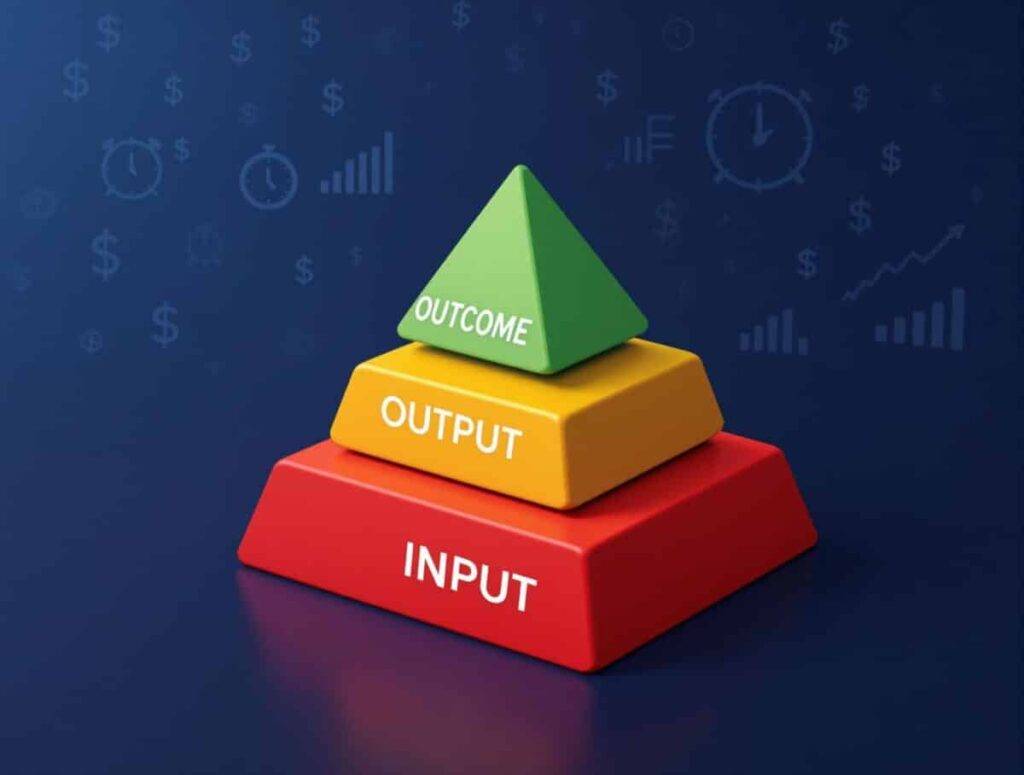
Which Pricing Model Is Best: Input, Output, or Outcome-Based?
The way a consultant prices their work reveals how they think about value, risk, and results. Here's what each model means for the buyer and which one produces the best outcomes.

Most growth strategies focus on tactics. But the businesses that grow fastest invest in brand first. Three pillars, Awareness, Authority, and Affinity, create the compounding effect that turns expertise into market leadership.

Power Positioning is a framework built on four pillars: Focus, Aim, Multiply, and Engage. Here's how the FAME framework works and why it matters more than ever in an AI-driven market.

How a Fractional CMO Turns Marketing From a Cost Center Into a Growth Engine
Most companies that think they need more marketing actually need better marketing leadership. Here's what a fractional CMO does about it, and why the AI-fluent, multi-discipline version matters more than ever.

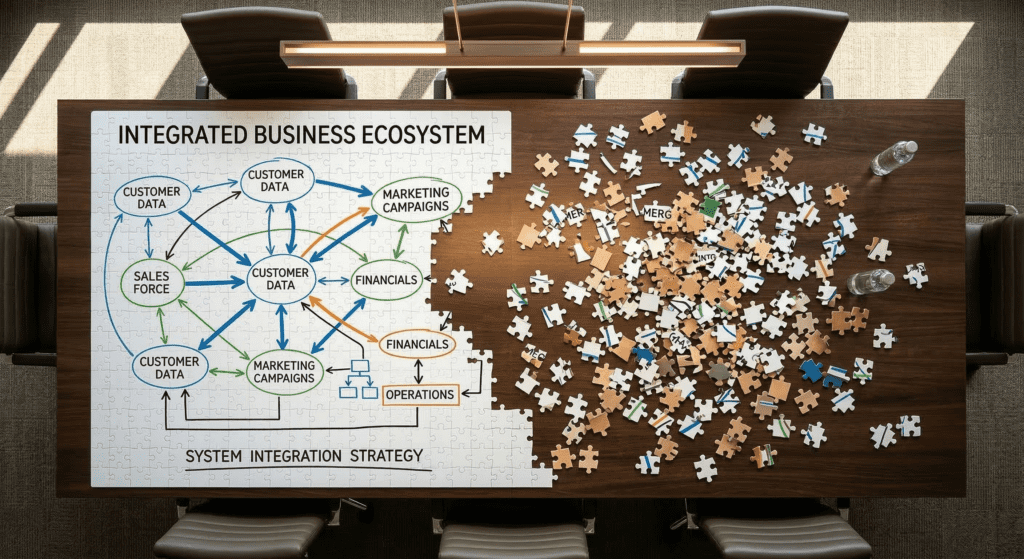
Why Your Growth Problem Is an Architecture Problem (And How to Fix It)
Revenue architecture connects marketing, sales, and customer success into one compounding growth engine. Learn how strategic diagnosis and system redesign produce predictable, scalable revenue.

Most companies use AI as a content factory. Expert-led businesses need something different: AI that amplifies their actual expertise instead of replacing it with generic output.


Why Your Revenue Problem Isn’t a Sales Problem (And What a Fractional CRO Does About It)
When revenue stalls, the instinct is to fix sales. But the real problem is usually that marketing, sales, and customer success are all optimizing in different directions. Here's how a fractional CRO fixes the system.

Why a Fractional Chief Strategy Officer Is the Missing Hire You Actually Need
Most companies that plateau don't have a marketing problem or a sales problem. They have a strategy problem. Here's what a fractional CSO does about it.

How Organic Visibility Compounds Into Revenue
Rankings don't equal revenue. Here's how I approach organic visibility as a strategic growth lever, not a technical checklist, and why that distinction changes everything.
Accelerate Your Revenue Growth
Partner with a senior fractional executive to fix broken marketing systems and architect a scalable revenue engine for your growth-stage brand.

Fractional executive services, including senior CMO, CRO, CSO, and CGO expertise for growth-stage and expert-led firms. Diagnosing and fixing broken marketing and revenue systems.
Services
Contact
- Ottawa, Ontario (Canada)
- +1 (613) 255-5274
- contact@michelfortin.com
© 2026 Michel Fortin. All rights reserved.