What Boards Get Wrong About Growth Strategy

Michel Fortin
Author
Article Summary
Boards consistently misframe growth as a departmental problem rather than a system design problem. This post examines four recurring errors: treating growth as a marketing or sales function, tracking trailing metrics instead of systemic signals, reaching for new hires before fixing underlying architecture, and delegating positioning decisions that belong at the executive level. The better board conversation starts with a diagnostic, not a dashboard.
Most board conversations about growth follow a predictable script. Revenue is flat or slowing. Someone asks what marketing is doing. Someone else asks about the sales pipeline. The CMO presents a slide deck full of campaign metrics. The CRO presents a pipeline forecast. Everyone nods, action items get assigned, and the same conversation happens again next quarter.
I’ve sat in enough of these meetings to know the problem isn’t the people in the room. It’s the frame. Boards tend to treat growth as a departmental output rather than a system design problem. And that framing error cascades into everything else.
Growth Is Not a Department
The most common mistake I see at the board level is treating growth as something that belongs to marketing, or to sales, or to a “growth team” that sits somewhere between the two. This creates a structural incentive for each function to optimize its own metrics while the overall system underperforms.
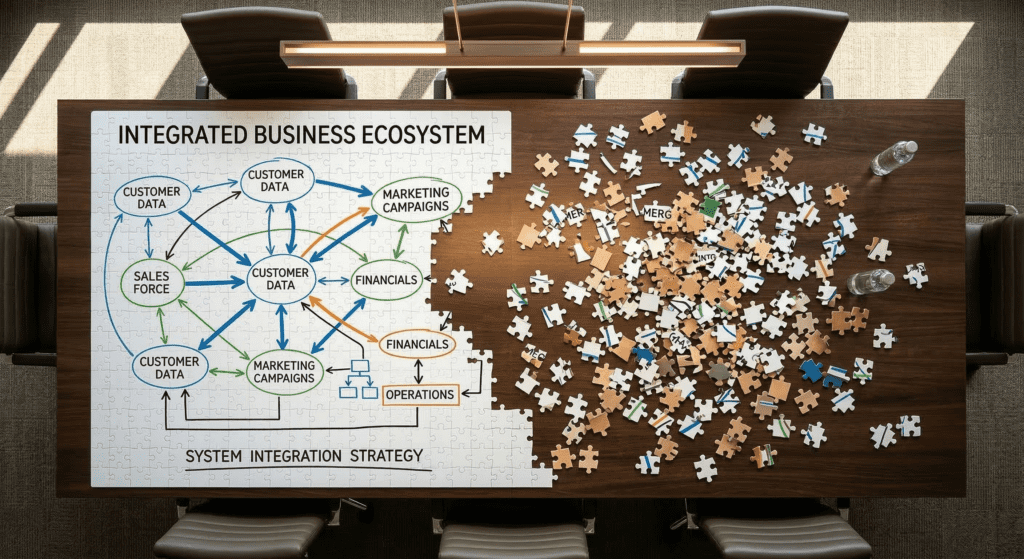
I wrote about this dynamic in detail when I explained why positioning comes before plumbing. The companies that plateau despite increasing spend and activity almost always have the same root cause: disconnected revenue functions that each look healthy in isolation but fail to compound when viewed as a whole.
A board that asks “what is marketing doing about growth?” is asking the wrong question. The right question is “how well are our revenue functions connected, and where are the leaks?”
The Metrics Trap
Boards love dashboards. That’s understandable. You need data to govern effectively. But the metrics most boards review are trailing indicators wrapped in vanity packaging.
Pipeline value, MQL volume, conversion rates, CAC payback periods. These all matter. But they describe what already happened, not what’s about to happen. And they rarely surface the systemic issues that actually constrain growth.
The boards I’ve worked with that make better growth decisions tend to track a different set of signals. They want to know how positioned the company is within its market, not just how much activity it’s generating. They measure authority and visibility alongside pipeline, because they understand that a company that’s invisible to its market has to buy every conversation it gets.
When I step into a fractional CSO engagement, one of the first things I do is audit what the board is actually looking at. More often than not, the dashboard needs redesigning before the strategy does.
The Hire-First Instinct
Here’s another pattern I see repeatedly. Growth stalls, so the board pushes for a new hire. A VP of Growth. A new CMO. A demand gen leader. The assumption is that the right person will fix the problem.
Sometimes that’s true. But more often, the hire fails because the underlying architecture wasn’t ready for them. They walk into misaligned teams, disconnected systems, and unclear positioning, then spend their first six months trying to untangle the mess instead of building on it.
This is one of the reasons fractional leadership has gained so much traction. A fractional executive can come in, assess the architecture, fix the foundation, and either stay to execute or hand off to a permanent hire who now has something solid to build on. It’s a faster path to results and a lower-risk path for the board.
The question isn’t “who should we hire?” It’s “what does the growth architecture need before a new hire can succeed?”
Positioning Is a Board-Level Decision
Most boards delegate positioning entirely to marketing. That’s a mistake.
Positioning determines how the market perceives your company relative to alternatives. It affects pricing power, win rates, talent acquisition, partnership leverage, and investor confidence. Those are board-level outcomes that deserve board-level attention.
When I work with companies on positioning, the conversation always starts at the leadership level, not the marketing level. The reason is simple: positioning decisions require trade-offs that marketing can’t make alone. Choosing to focus on a specific segment means deprioritizing others. Leading with a particular value proposition means subordinating competing messages. These are strategic choices that need executive alignment.
The boards that treat positioning as “a marketing thing” tend to end up with a company that means different things to different departments. Sales positions one way in conversations. Marketing positions another way in content. Product builds toward a third interpretation. The market receives all three signals and forms its own conclusion, which is usually confusion.
The AI Question Boards Should Be Asking
Every board is talking about AI right now. Most of those conversations focus on efficiency: how can we automate more, reduce headcount, speed up production?
Those are valid operational questions. But they miss the strategic one.
The strategic question is: how does AI change our positioning, and how do we use it to become more valuable to our market rather than just faster?
I’ve written about the high-tech, high-touch dynamic in detail. The short version is that every wave of automation triggers a counter-demand for human expertise and genuine connection. The companies that use AI to free up capacity for deeper client relationships, more original thinking, and more personalized engagement will outperform those that simply use it to cut costs.
For boards, the implication is clear. AI strategy isn’t an IT conversation. It’s a positioning conversation. And it belongs in the same strategic planning framework as market selection, competitive differentiation, and growth architecture.
What Better Board Conversations Look Like
The boards I’ve seen make the strongest growth decisions share a few common habits.
They discuss the company’s competitive position before they discuss campaign performance. They understand that organic visibility is a strategic asset, not a marketing tactic. They ask about the health of the revenue system, not just the output of individual departments. And they hold leadership accountable for architectural coherence, not just functional metrics.
They also resist the urge to solve growth problems with more activity. More campaigns, more hires, more tools, more channels. The instinct is natural, but it usually compounds the problem. If the architecture is misaligned, more volume just creates more waste at a higher cost.
The better question is always: “What’s the constraint?” Sometimes it’s positioning. Sometimes it’s the handoff between marketing and sales. Sometimes it’s a content strategy that generates traffic but not authority. The answer changes, but the discipline of asking the right question doesn’t.
The Conversation I’d Want to Have
If I were presenting to your board, I wouldn’t start with a campaign plan. I’d start with a diagnostic.
I’d want to understand how your revenue functions connect, where your market positions you relative to competitors, and whether your growth constraints are architectural or executional. That diagnostic process is what separates strategic growth work from the quarterly marketing review that everyone endures but nobody finds useful.
Growth isn’t broken because the people are wrong. It’s usually broken because the system was never designed as a system. Boards that recognize this, and govern accordingly, are the ones I’ve seen build sustainable, compounding growth.
Frequently Asked Questions
Why is treating growth as a marketing or sales problem a mistake?
It creates a structural incentive for each function to optimize its own metrics while the overall revenue system underperforms. Marketing generates leads, sales closes deals, and both can look healthy in isolation while the company plateaus. The better board question isn’t “what is marketing doing about growth?” — it’s “how well are our revenue functions connected, and where are the leaks?”
What’s wrong with the metrics most boards track?
Most board dashboards are built on trailing indicators — pipeline value, MQL volume, CAC payback — that describe what already happened rather than what’s constraining growth next quarter. The boards that make better decisions also track positioning strength and organic authority alongside pipeline, because a company that’s invisible to its market has to buy every conversation it gets. The dashboard often needs redesigning before the strategy does.
Why does hiring a new executive often fail to fix a growth problem?
Because the hire walks into misaligned teams, disconnected systems, and unclear positioning, then spends their first six months untangling the mess instead of building on it. The underlying architecture wasn’t ready for them. The better question before any hiring decision is: what does the growth architecture need in place before a new hire can actually succeed?
Why is positioning a board-level decision rather than a marketing decision?
Because positioning determines pricing power, win rates, talent acquisition, partnership leverage, and investor confidence — all board-level outcomes. And the trade-offs positioning requires, like choosing which segments to prioritize and which messages to subordinate, need executive alignment to hold. When boards delegate positioning entirely to marketing, sales, marketing, and product all end up positioning the company differently. The market receives three conflicting signals and reaches its own conclusion, which is usually confusion.
What is the AI question boards should actually be asking?
Not “how do we automate more?” but “how does AI change our positioning, and how do we use it to become more valuable to our market rather than just faster?” Every wave of automation creates a counter-demand for human expertise and genuine connection. The companies that use AI to free up capacity for deeper relationships and more original thinking will outperform those that simply use it to cut costs. For boards, AI strategy is a positioning conversation — not an IT conversation.

Michel Fortin
Michel Fortin is the creator of Power Positioning and a fractional CMO/CGO/CSO who helps growth-stage companies, expert-led firms, and SaaS brands diagnose what's stalling their organic growth and build the systems to fix it. Over 35 years and more than 200 industries, his work has influenced over $3 billion in revenue by combining deep positioning expertise with AI-powered marketing strategy. He's the author of Power Positioning and a recognized thought leader on organic visibility and authority-driven growth. Michel writes the Fortin File™ Newsletter (on Substack), where he shares strategic insights on positioning, AI, and sustainable growth for leaders and consultants.

Flat organic numbers tempt teams to do more of everything. More content, more links, a new agency. Here’s how I find the one constraint behind a stall before anyone spends another dollar on the wrong fix.

One framework will lie to you with total confidence. PULSE is the five-lens read I run before I touch a stalled business, rebuilt for the age of AI search.

When a buyer asks ChatGPT who to hire, the answer names a few firms and skips the rest. Here’s how I help consultancies and other expert-led firms become one of the names AI search cites.