Every wave of technology triggers a counter-demand for human connection. AI is no different. Here’s the framework I use to help companies balance automation with authenticity.

Strategic planning articles. Diagnosis before prescription, positioning decisions, and building a through-line from goals to growth.
Every wave of technology triggers a counter-demand for human connection. AI is no different. Here’s the framework I use to help companies balance automation with authenticity.

Most board-level AI conversations focus on cost savings and efficiency. The better conversation is about positioning, risk, and competitive advantage. Here’s how to frame it.

The playbooks that drove growth for the past decade have quietly stopped producing results. Here are the three I see failing most often and what’s replacing them.

Most fractional CMO searches focus on credentials and references. The better filter is strategic fluency. Here’s a practical framework for evaluating whether a fractional CMO can actually solve your growth problem.
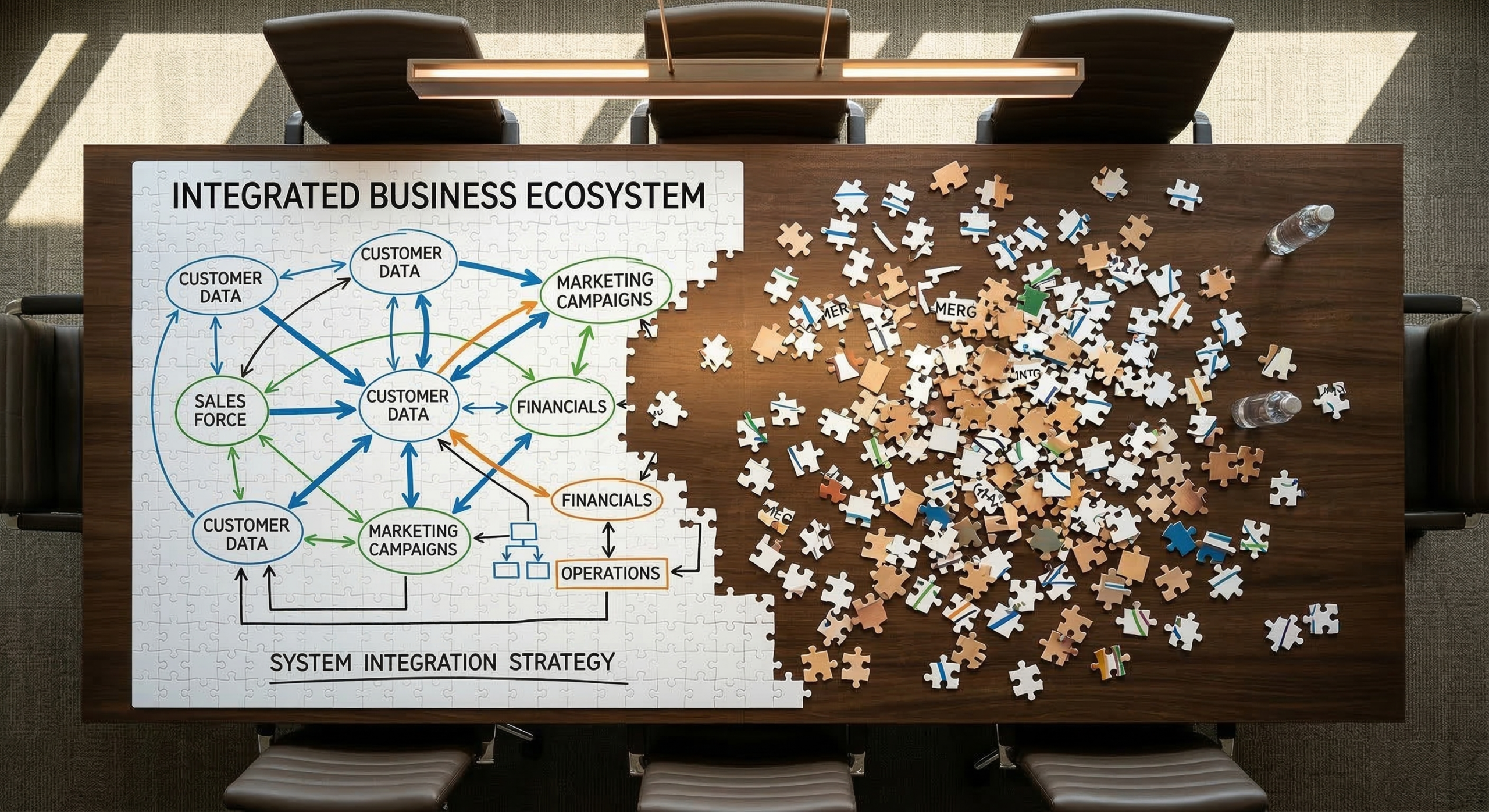
Most boards treat growth as a marketing problem or a sales problem. It’s neither. Here’s what I’ve seen go wrong at the board level and how the best companies fix it.

Most consultants start with solutions. The best fractional executives start by reading the business through three diagnostic lenses before they prescribe anything.

When a strong offer underperforms, the culprit is usually the audience, not the price, message, or funnel. Effective targeting answers two distinct questions in order: Fit (who the buyer actually is) and Placement (where they can be reached). The Bullseye Method maps Placement as three concentric rings around the same ideal buyer. In 2026 the scarce resource is attention, not budget, and in enterprise the buyer often splits across three roles that sit in different rings. Get both reads right, in that order, and the downstream metrics fall into line.

Competitive intelligence isn’t a research task you hand off. It’s one of the most direct inputs into positioning decisions. Here’s the framework I use to read a competitive landscape before making any strategic recommendation.

Most messaging misreads the buyer. OATH reads two things, how aware they are and how willing they are to act, so your message meets them where they are.
Fix broken organic marketing systems and architect a durable, scalable exposure engine for your personal brand and/or growth-stage firm.
Fractional executive services, including senior CMO, CGO, and CSO expertise for growth-stage and expert-led firms. Diagnosing and fixing broken organic marketing systems.
© 2026 Michel Fortin. All rights reserved.