A senior executive viewing an AI search interface that has cited their named framework in a synthesized answer, with handwritten source material visible beside the laptop. The image illustrates the article's argument that AI search cites content worth citing rather than approximating it, and that named frameworks travel intact through AI search while generic content gets paraphrased and the source link gets dropped.

Why AI Search Stopped Rewarding the Content That Used to Win Google

The shift to AI search did not invent a new set of content rules. It enforced the rules Google has been trying to enforce for the better part of a decade. The expert content that wins AI citation in 2026 is the content that should have been winning Google rankings since the Helpful Content Update in 2022. The operators who built to the principle rather than to the algorithm have a four-year head start. The operators who optimized against the algorithm are rebuilding for the third time.

Read More
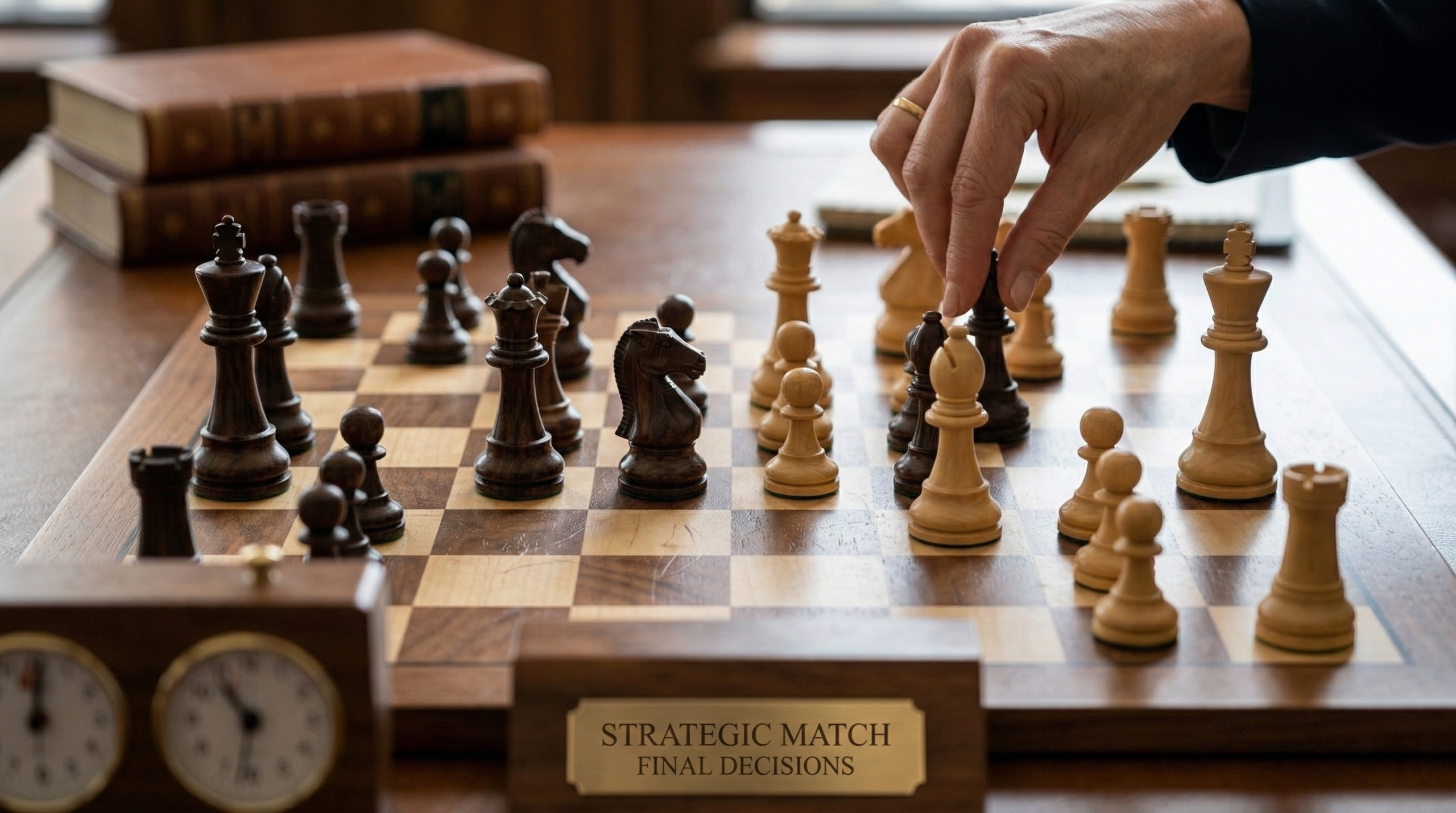
A hand moving a dark chess piece on a wooden board mid-game, with a chess clock and books in the background, representing competitive strategy and deliberate market positioning decisions.

How I Read a Market Before I Make a Move

Competitive intelligence isn’t a research task you hand off. It’s one of the most direct inputs into positioning decisions. Here’s the framework I use to read a competitive landscape before making any strategic recommendation.

Read More