10 Things You Probably Don’t Know About Fractional Executive Michel Fortin

Michel Fortin
Author
Article Summary
Behind the frameworks and client results is a person who learned to code at 12 on a 300-baud modem, set the Canadian national powerlifting record at 48 with a 485-pound deadlift, played Jesus Christ on stage, and keeps three bands going. This post covers ten lesser-known facts that explain the thinking behind his work: a lifelong pattern of combining technical obsession with human empathy, and treating every discipline as a lens on how people make decisions.
People sometimes ask about my background. Not the professional credentials, but the stuff that doesn’t fit neatly into a resume. I’ve been doing this for over 35 years, and I still get new readers and subscribers who don’t know a thing about me. So here are ten things about me, in no particular order.
1. My Name is Not What You Think It Is
My name is “Michel,” formally pronounced “Mee-shell.” It’s the French-Canadian spelling of Michael but without the “a.” For a decade, people kept asking me: “So which is it: Michel? Michael? Mike?” (I always say I prefer “Master Overlord,” but that’s a longer conversation.)
When I introduce myself to English-speaking audiences, particularly Americans, I pronounce it as “Michael.” The reason is practical. The first time someone introduced me to an American client, he responded with genuine confusion: “But you’re not a girl!”
In French, the absence of an “e” at the end (in Latin-based languages, it’s is like an “o” instead of “a”) makes it unmistakably male. But in spoken English, the French pronunciation sounds identical to “Michelle Obama.”
My French-Canadian parents actually nicknamed me “Michael” when I was a child. They even bought me my first vinyl record of the song “Playground In My Mind” by Clint Holmes, whose chorus goes, “My name is Michael, I got a nickel.” So the nickname was already baked in before I ever had to explain it to a confused American.
If you’ve ever wondered how to say it: “Michael” works. “Mike” is fine, too. “Mish” is what my late wife called me. My middle name is Guy. And the high school nickname that stuck for a while was “Spike,” which I’ll leave unexplained.
2. I Grew Up Bilingual in a Town That Was Technically Supposed to Be French-Only
I was born and raised in Aylmer, Québec. It’s a small, mostly bilingual French-Canadian town that has since become a suburb of Gatineau. Gatineau sits directly across the Ottawa River from our nation’s capital.
Growing up bilingual gave me an unusual advantage. I can write and think in two languages simultaneously, which turns out to be useful when you’re trying to understand how people search, how they phrase problems, and how they decide whether to trust someone.
Years later, I also learned Portuguese well enough to recite my wedding vows after marrying a Canadian-Portuguese immigrant named Barbara who works as a nurse in labour and delivery at The Ottawa Hospital. I wanted to say something in her language on our wedding day.
Yes, it sounds like a scene from Love, Actually. She confirms this.
3. My First “Social Network” Ran on a 300-Baud Modem
Long before the internet existed as most people know it, I was online.
As a child in the late 70s, I surfed Bulletin Board Services (BBS) through a dial-up modem so slow you could watch individual characters appear on screen. By age 12, I had learned to code and was playing Scepter of Goth, widely considered to be the first multiplayer online role-playing game.
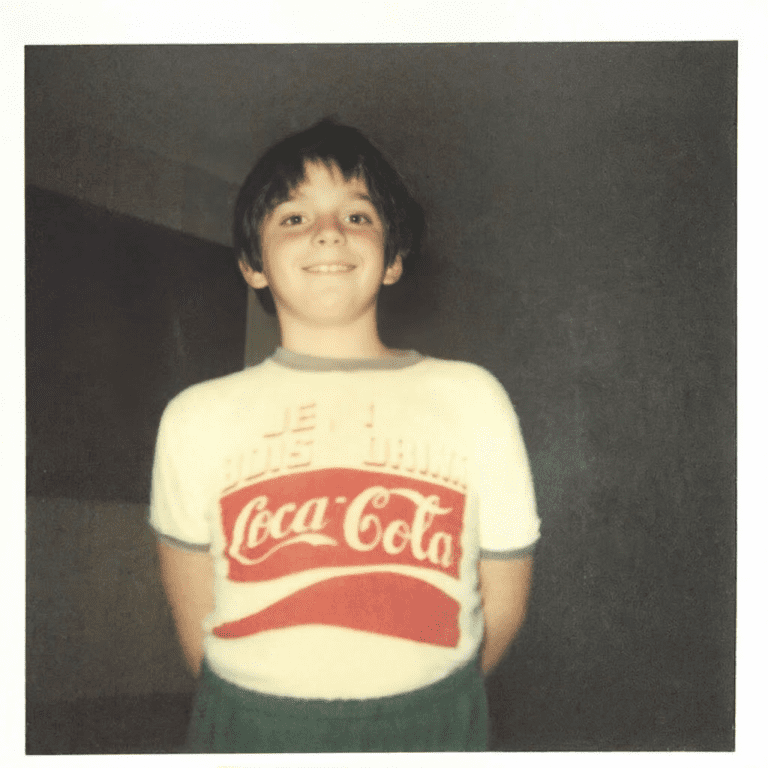
That’s where I fell in love with what would eventually become the internet. The network wasn’t impressive by any standard. But the idea of connecting with strangers, solving problems together in real time, and building things in a shared digital space stuck with me.
When the commercial internet arrived in the early 90s, it didn’t feel new to me. It felt like something I had been waiting for.
4. My First Job Paid $2.54 an Hour Canadian
My first job was at McDonald’s in the early 80s. My wage was $2.54 per hour Canadian, which, at the time, was less than two US dollars.
Two lessons I carry from those early working years: rejection at scale teaches you nothing about your value, only about your targeting. And the right words, delivered to the right person, at the right time, beat all the hustle in the world.
5. I Was a Competitive Powerlifter Who Once Walked with Canes
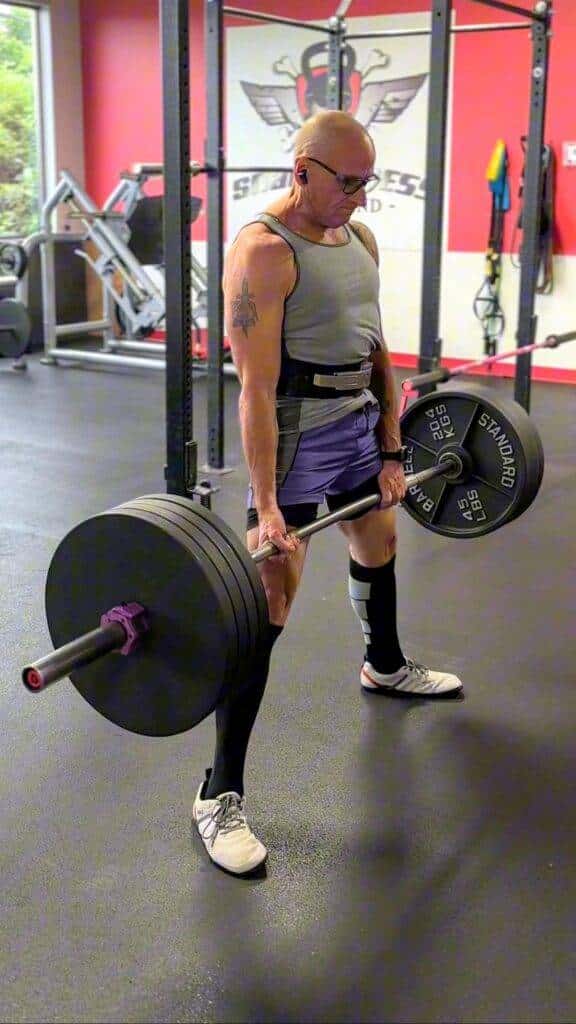
For years, I walked around with canes. I had two herniated discs and was obese. The kind of situation where most people scale back their ambitions. I went the other direction. I took up powerlifting to strengthen my back and lose weight. I ended up losing about 100 pounds and competing at a national level.
At 48 years old, I set the Canadian national powerlifting record with a 485-pound deadlift. That record still stands. I can no longer lift heavy due to a mild heart condition, so I’ve shifted to bodybuilding-style workouts. But the discipline stays.
The mentality of adding weight to the bar one plate at a time is the same mentality I bring to building revenue systems. Incremental, consistent, compounding.
6. I Played Jesus Christ on Stage (and Later, an Italian Mobster)
I was into acting when I was young. I performed in many school plays and even won awards. My favorite role was playing Jesus Christ, which is about as far from “marketing consultant” as you can get.
More recently, I played an Italian mobster specializing in “family cleaning” in a weekly murder mystery theater in Ottawa. That ran for a couple of years.
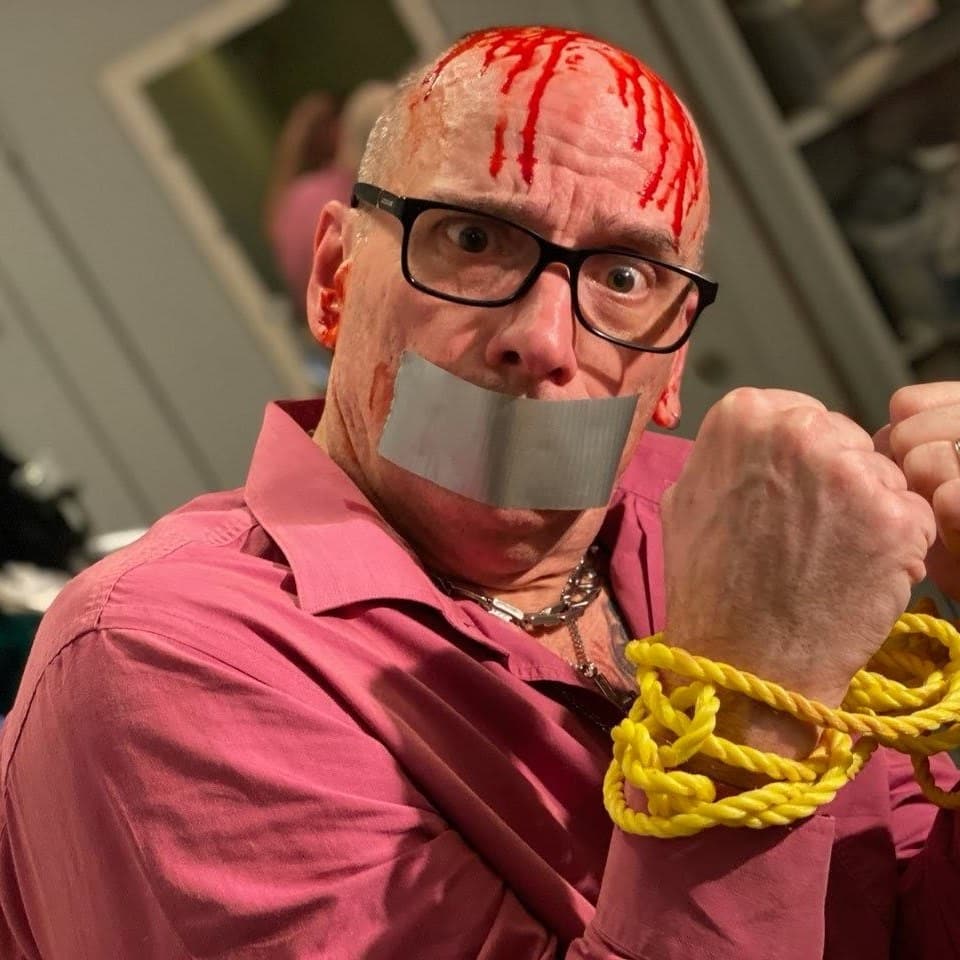
People who know me as a strategist are sometimes surprised to learn I spent years performing on stage. But the skills overlap more than you’d think. Reading an audience, controlling timing, adjusting delivery based on the room. Those translate directly to presentations, client meetings, and sales conversations.
7. Personality Tests Say I Shouldn’t Exist
I’ve taken nearly every major personality assessment available, and the results are consistently unusual.
My APT Career Path Assessment identified me as a “Discerning Innovator” with three workplace superpowers: Strategic Futurist, Empathetic Architect, and Decisive Troubleshooter. My DiSC profile shows a rare high-D/high-S combination (the “Producer” or “Achiever” pattern) that appears in only 3-5% of the population.
Most people are either dominant and fast-moving or steady and methodical. I’m both.
The Working Genius assessment by Patrick Lencioni’s Table Group labeled me “The Discriminating Ideator,” a pairing of Invention and Discernment. That means I get energy from creating original solutions and evaluating whether those solutions actually work. My frustration areas are Enablement and Galvanizing, which means I’d rather build the strategy than rally the troops.
If you put it all together, you get someone who sees problems before they surface, builds frameworks to solve them, and has zero interest in cheerleading. That profile confuses people who expect leaders to be either visionaries or operators. It makes more sense when you realize some people are both.
8. I Play in Three Bands
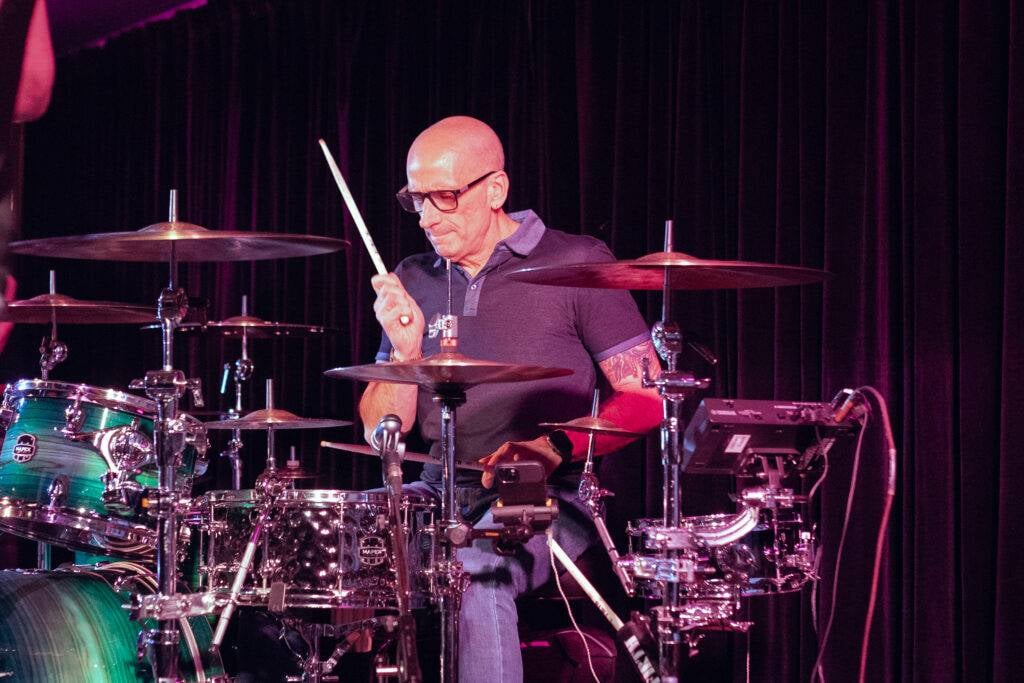
People know me as a strategist. They may not know that the strategist needs a drum kit to stay sane. I play in three bands. Nelson Colt is a professional country band. Divided Highway is a classic rock band. The third is a more recent project covering 80s through 2000s rock.
My biggest drumming influences are John Bonham from Led Zeppelin and Ian Paice from Deep Purple. Lately, I’ve been obsessed with II from Sleep Token, who is doing things behind the kit that shouldn’t be possible. In short, music is not a side hobby for me. It’s the thing that keeps everything else in balance.

9. AI is My Obsession (and I Run a Masterclass on It)
I’ve been a technology nerd since I was 12 years old on a 300-baud modem. So when AI started reshaping how businesses operate, I didn’t panic. I leaned in.
I now run a monthly AI masterclass at ConsultingSuccess.com/ai and manage most of the company’s AI-driven workflows. My approach is rooted in what John Naisbitt called the “high-tech, high-touch” paradigm in his book Megatrends.
The idea is simple but counterintuitive. The more automated and roboticized we become, the more we seek out human relationships, human interaction, and human judgment. AI doesn’t replace the human element. It makes the human element more valuable.
That’s the lens I bring to every AI implementation. Not “how do we automate this?” but “how do we use automation to make our human work more impactful?”
10. SEO Changed the Way I Think About Everything
When I moved from freelance copywriting into an agency role as SEO manager and director of marketing communications, I expected to feel like I was starting over. Instead, I felt like I had arrived somewhere I had always been heading. SEO is not a technical discipline. At its core, it’s an empathy discipline.
Know your market. Know the problems they face. Know the exact language they use when they describe those problems. Answer them as clearly and credibly as you can.
That’s copywriting. It’s also SEO. And done at the strategic level, connecting visibility to pipeline to revenue, it’s what I now call Power Positioning.
If you want the full career story, including the bankruptcy at 21, the industry I left behind, and the losses that shaped everything, I wrote about all of it in my Career Story.
Frequently Asked Questions
How do you pronounce Michel Fortin’s name?
“Michel” is the French-Canadian spelling of Michael, without the “a.” In French it’s pronounced “Mee-shell,” but with English-speaking audiences Michel typically uses the English pronunciation — “Michael” — to avoid confusion. His parents actually nicknamed him Michael as a child. “Mike” works too. His late wife called him “Mish.”
Where is Michel Fortin from?
Michel was born and raised in Aylmer, Québec, a bilingual French-Canadian town now part of Gatineau, directly across the Ottawa River from Ottawa. Growing up bilingual gave him an early advantage in understanding how people phrase problems and express trust across different linguistic and cultural contexts — something that turned out to be directly relevant to his later work in copywriting, SEO, and market positioning.
Did Michel Fortin really set a national powerlifting record?
Yes. At 48 years old, he set the Canadian national powerlifting record with a 485-pound deadlift. He had previously walked with canes due to two herniated discs and obesity, and took up powerlifting specifically to rehabilitate his back. He lost roughly 100 pounds and competed at the national level. The record still stands. A mild heart condition has since shifted his training toward bodybuilding-style workouts.
What personality type is Michel Fortin?
Assessment results put him in rare territory across multiple frameworks. His DiSC profile shows a high-D/high-S combination — described as the “Producer” or “Achiever” pattern — found in only 3–5% of the population. His Working Genius profile is “The Discriminating Ideator,” combining Invention and Discernment. He gets energy from creating original solutions and evaluating whether they actually work. His APT Career Path Assessment identified him as a Strategic Futurist, Empathetic Architect, and Decisive Troubleshooter simultaneously.
What does Michel Fortin do outside of work?
He plays drums in three bands: Nelson Colt (country), Divided Highway (classic rock), and a third covering 80s through 2000s rock. His primary influences are John Bonham and Ian Paice, with a current obsession with the drummer from Sleep Token. He also performs in community theater — recent roles include an Italian mobster in a weekly murder mystery production. Music isn’t a side hobby; it’s described as the thing that keeps everything else in balance.

Michel Fortin
Michel Fortin is the creator of Power Positioning and a fractional CMO/CGO/CSO who helps growth-stage companies, expert-led firms, and SaaS brands diagnose what's stalling their organic growth and build the systems to fix it. Over 35 years and more than 200 industries, his work has influenced over $3 billion in revenue by combining deep positioning expertise with AI-powered marketing strategy. He's the author of Power Positioning and a recognized thought leader on organic visibility and authority-driven growth. Michel writes the Fortin File™ Newsletter (on Substack), where he shares strategic insights on positioning, AI, and sustainable growth for leaders and consultants.

When I asked ChatGPT about my own method, it named me. When I asked the same buyer question without my method’s name, it named four other people. Here’s what that gap taught me.

Flat organic numbers tempt teams to do more of everything. More content, more links, a new agency. Here’s how I find the one constraint behind a stall before anyone spends another dollar on the wrong fix.

One framework will lie to you with total confidence. PULSE is the five-lens read I run before I touch a stalled business, rebuilt for the age of AI search.